
This website of mine is more than just information about my current primary focus in life (TEFL). I have decided to include some (rather) personal information about my daily life. I am doing this for a number of reasons. The most important one is that we learn for sharing. Sharing is caring. The more we share, the more we learn, the more we grow!
Read MoreOnline English Classes
MARIUS ENGELBRECHT
your DEDICATED TEFL tutor
About me/ Why me?
Just an ordinary man, trying to INSPIRE through sharing, coaching and teaching
(Please note that this synopsis was prepared for agents, recruiters and students scouting / looking for qualified TEFL coaches/teachers. My TEFL CV as well as my full Curriculum Vitae is available on my DOWNLOADS page)
ABOUT ME
EARLYEARS (1969 – 1987)
Born in 1969 as the fourth child to loving AFRIKAANS speaking (see note 1) parents, I grew up in Lutzville, a very small and conservative town in the Western Cape Province of South Africa. Here I finished both primary and secondary school, completing my senior year at school with a distinction (see note 2) in 1987. I was quite proud to pass English with a distinction in my final Grade 12 examinations. I was a balanced scholar, Head boy of both my primary and secondary schools and also received cultural honours for public speaking, amongst others. On an almost daily basis I assisted some of my class mates who struggled with certain subjects. Before examinations, I would get some learners together at my home and would share with them my knowledge on how to master difficult subjects such as English, Accounting and Mathematics.
UNIVERSITY STUDIES (1988 – 1991)
With a fully paid scholarship/bursary from Sasol, South Africa's biggest local oil company, I started my studies at the University of Stellenbosch in 1988. I completed my 3-year Bachelors degree with Business Management and Economics as my major subjects in 1990. In 1991 I advanced my studies by doing a post-graduate Honours degree in Marketing Management (see note 3). I obtained/passed my degree with a Cum Laude. During my honours year I conducted practical classes as a Lecturer's Assistant. I further assisted with the drafting and finalization of examination papers. I also assisted with the marking of such papers.
WORKING CAREER – OIL INDUSTRY (1992 – 1998)
In 1992 I started working for Sasol Heating Fuels (see note 4) as an Assistant-Marketing Officer. While developing the first Call Centre in Sasol's (and local oil industry's) history, I conducted training workshops for all staff to establish the principles of first-class customer service. This was also the beginning of telesales/telemarketing for Sasol, for which communication training and subject matter training were key. This training was further extended to manufacturers and suppliers of Sasol. In 1994 I was promoted and joined Sasol Oil's Blue Pump Division (see note 5) where I was eventually responsible for service delivery as Assistant Manager: Customer Care. Again, I conducted training not only in customer service principles, but also in the use of our IT system for customer care, which I co-designed to manage customer interaction and satisfaction. While working for this Sasol division, I was appointed as a permanent editorial member for the company newsletter (Sasol Oil News), to which I submitted several articles. After fulfilling the role of Manager: Depot Services (1996 - 1997) at Sasol's biggest fuel depot, I was appointed as Project Leader for Project Naledi, a project aimed at the establishment of South Africa's first true Black empowered oil company - Exel Petroleum. Seeing that I dealt with senior Board members and influential business people at this time, my written communication skills improved dramatically. Due to my successes as Project Manager, I was then appointed as Customer Care Manager for Exel in 1997, again responsible for the training of all staff at all levels on the importance of service delivery. Reporting to the Managing Director of a company for the first time, encouraged me to improve the standard of both my English speaking and writing abilities.
WORKING CAREER – CELLULAR INDUSTRY (1998 – 2009)
Changing industries in 1998, I was recruited by Teljoy Cellular Services as their Customer Care Manager. With the cellular industry only 2/3 years old in South Africa at the time, my Training Supervisor and I worked hard to convert paper-based training material into e-notes, online training manuals. This was done on the back of a massive launch of internet and email in our company that year. While at Teljoy Cellular Services in 1998, my Training Supervisor and I assumed full training responsibility for the company's Call Centre and even other departments (on invitation). I also conducted monthly induction (training) sessions on the role of our division to all new staff members joining the company. Monthly submission of articles to our company newsletter (The Speedball) was one of my favourite activities. Every time training was changed to adapt to new technologies, I designed new policies and procedures with the departments the Call Centre interacted with. I took part in live TV broadcasts to our staff in order to keep all employees up-to-date with developments in the company. I also conducted presentations to customers of the company, for them to see the benefits of partnering with a company (Teljoy) with a first class Call Centre.
The year 2000 saw an amalgamation of cellular companies in South Africa and Teljoy Cellular Services was bought out by Vodacom Service Provider Company (see note 6). As Manager: Customer Services Projects my main aim was to make one Call Centre from all the different ones that existed at the time. Using best-of-breed technologies, policies and procedures from individual Call Centres, I initiated the Best Practices Task Team, ensuring that the best product/service/process was implemented. The training intervention for my team and I was mammoth, but extremely fulfilling! I was part of Vodacom's e-business project, aimed at a new single website and the start of e-commerce. My special projects team worked hard with the rest of the company to decide which products and services should be discontinued. Again, major initial and ongoing training were needed. I managed the One Call Project, of which the aim was to standardise the way in which the new company would communicate with this new, very diverse base of customers. I was then appointed by the Managing Director of Vodacom SP Company as Project Leader for the merger. My main focus was to finalise all outstanding actions pending from the merger. I communicated and co-ordinated cross-divisionally to ensure no duplication of tasks and efforts. I conducted a number of critical workshops with members of the Executive Committee (EXCO) and Operational Heads (OPCO), from which I drafted comprehensive reports and action plans. As part of the weekly meeting our Managing Director had with the EXCO, I got assigned a number of tasks to action and give feedback on (verbal and written). In April 2001 I was appointed to Vodacom SP Company's executive management team and was assigned the responsibility of Executive Head Of Division (EHOD): Operations Support. I successfully led about eighty (80) staff members, spread over seven (7) very diverse operational teams (see note 7). The Special Projects team had to identify areas, products and services in need of efficiency improvements - including the development of new offerings. Quality Assurance as a team had to ensure the whole Vodacom SP Company complied with best-of-breed quality principles, adhered to South African Occupational Health and Safety Legislation (OHSAS18001) and was certified in ISO9001, an international standard for quality management. This implied continued communication between not only teams, but different operational divisions to ensure effective hand-over in product and service delivery. I worked closely with my Training team, ensuring that proper training and development were conducted before new policies/procedures got implemented. My Training Specialist and I ensured monthly training for about 250 staff members across all the departments of the Operations Division. Personal Development Plans were designed and progress against said plans were measured for all staff members in one-on-one bi-annual performance management sessions. Training & Development had various targets, one being the extent to which training improved skills required by the job function - including (verbal & written) communication. Being responsible for these seven business-critical areas, I regularly conducted presentations at dealer conferences to communicate developments in operations. After a restructuring within Vodacom, I was appointed as Executive Head of SHEQ (Safety, Health, Environment and Quality) in 2005 (see note 8), a position I held until 2009. Regular training sessions were conducted to ensure not only staff compliance, but also third-party compliance to policies and procedures. Besides day-to-day training, I personally conducted several comprehensive presentations to Executive Heads of Divisions, Managing Executives, Group Executives and Directors of Vodacom on a range of SHEQ and ISO principles, activities and responsibilities. With the aim of starting my own business, I resigned from Vodacom in 2009.
MY OWN BUSINESSES (2009 – 2013)
Between 2009 and 2013 I owned two rather big businesses, which gave me different, yet vitally important, business experience. The first was an American printing franchise, called Minuteman Press. I started a new franchise, based in Roodepoort, Gauteng Province, South Africa. This business focused on printing, copying, graphic design and even vehicle wrapping (vinyl overlay). After selling the business I bought an existing business called Axis Ironmongery Specialists. The company traded in ironmongery (all forms of steel you find on a door - from door handles to integrated mechanical opening systems). In 2013 I was head hunted by Cell C, South Africa's third largest cellphone network, and decided to re-join corporate South Africa, while my wife took over the management of Axis Ironmongery Specialists. More details on my responsibilities at these two companies can be provided.
BACK TO CORPORATE SOUTH AFRICA (2013 – 2018)
In 2013 Cell C, South Africa's third largest cellphone network, approached me and I was appointed as Senior Manager: Logistics. I had five (5) key areas of responsibility (see note 9) and approximately 40 staff members reported to me. I had to ensure that all operations had to be completed in accordance with the 4M-principles (Man, Machine, Money & Material). I later added on "P" for the ever important "Process" ... From a training perspective we had to focus on (a) ever-changing processes to accommodate customer requirements, (b) changes by our courier company that affected our operations, (c) keeping track of changes at big customers/national retail chains that purchased from us, (d) changes in product offerings that again affected our order processing methods and (e) keeping all staff informed on company-wide changes that affected my division, Logistics. Not only did each staff member have a Personal Development Plan (PDP), but each employee had a "RED-2-GREEN" path. Areas in which he/she had no/very little experience were mapped as RED and accomplished areas as GREEN. A roadmap and target process were implemented for all staff to move from red to as many green areas as possible. Major system training was conducted as we not only moved to an upgraded version of Oracle, but we also changed our Warehouse Management System (from PIGO to MatFlo) ... this while physically moving from four separate warehouses to a single warehouse over a weekend!). We had a scientifically developed Service Level Agreement (SLA) in place and non-conformance to the SLA drove our training (and disciplinary) initiatives. Due to a companywide cost-saving initiative, I was retrenched at the end of 2014.
Between 2015 and 2017, I re-joined my wife in the running of our existing company, Axis Ironmongery Specialists. More information is available on request.
With "corporate" blood still running strongly in my veins, I applied for a position in the Steinbuild group of companies in 2017. After stringent interviews, I was appointed as General Manager: Ironmongery Sales at Buchels, a company in the Steinbuild/Steinhoff group. I took overall managerial responsibility for three Buchels retail branches with close to ninety (90) staff members, doing both business-2-business (tenders/contract sales) and business-2-consumer (retail stores) sales and marketing. People management was key and I developed Key Performance Indicators (KPI's) for all job functions. Training interventions were based on KPI performance against targets. Besides staff, I also assumed responsibility for all five (5) key business functions (see note 10). Communication with such a big staff complement was key, not to mention the customer base. This was very important with the rebranding of one of our outlets. Different communiqués were issued to customers, suppliers and other players in our supply chain. Seeing that most staff members belonged to industry unions or bargaining councils/units, discussions and communications with their representatives added new skills to my professional list. Being responsible for the bottom line and profitability of a group of outlets for the first time, led me to acquire new skills in sales, marketing, retail technology, product design and branding, market research, stock management (obsolete, slow moving, etc.), import and export, website re-design to allow on-line shopping, etc. Although I faced retrenchment in 2018 again, the experience gained was of immense value.
A NEW CHAPTER (2019 – PRESENT)
I again joined my wife at Axis Ironmongery Specialists, but in 2019 we decided to close down the business. My wife quickly got recruited by a leading company in the ironmongery industry and I decided to take a sabbatical - a period of self-reflection, refocus and even recovery, if you will. This - by default - transformed me into a stay-at-home-dad, taking care not only of the household, but also our (at the time) 15 year old mentally disabled daughter - Jade. Jade was born with Cerebral Palsy. She cannot work or talk and still wears diapers. Having (some) time off during the day, I realised I was up for a new challenge. I started researching on-line business opportunities, making money online, website design, affiliate marketing and most recently TEFL (Teaching English as a Foreign Language).
After formally obtaining my TEFL qualification late in 2021, I am now available as an English Tutor for students (and anybody wanting to learn English) around the world. I believe this is and will forever be the closest to my passion - dealing with people - I will get to at this very fulfilling stage of my life.
NOTES:
When all is said and done, one of the most important decisions you have to make is WHICH online English tutor you want to work with. Selecting the wrong tutor or one that is not matching you and your energy, can be a mistake! Here as some reasons why I believe I should be your choice.
MY QUALIFICATION
I have obtained my TEFL qualification/certification in December 2021 from TEFL Station (teflstation@gmail.com), a South African company registered with the TEFL Professional Development Institute (www.teflinstitute.com). TEFL Station is an accredited TEFL certification school which provides training from a highly qualified instructor covering the skills and tools one will need to work as a professional English teacher. Professional-level TEFL courses must meet certain standards and include live practice teaching. After completing the 120-hour training program, I passed my final examination with an 87% pass rate (referred to as a HIGH DISTINCTION). My personal details, student number, as well as a list of the core units (study topics) I completed are available on my TEFL certificate, which can be downloaded from my DOWNLOADS page. For transparency reasons, you can also request said document directly from the Director – Academic Studies (admin@theteflcertificate.com).
A TEFL (Teaching English as a Foreign Language) certification is an internationally recognized professional credential that certifies that an individual is qualified to teach English as a foreign language. TEFL certification is typically required to secure a job teaching English abroad or online to non-native English language students.
To teach English as a foreign language online or in a foreign country (that is, a non-native English-speaking country), a TEFL certification is typically required, since schools and language institutes want to hire teachers who have received proper training.
One does not need to possess a degree in education, prior teaching experience, or even a college degree to get paid to teach English online or abroad. At minimum, you need a certification. Private language schools abroad, online teaching companies and government programs that recruit native English speakers to teach abroad all seek to hire people who have received a certain degree of professional-level training. A TEFL certificate provides exactly that. Although not a required, I hold two degrees from the University of Stellenbosch (South Africa). Both the Bachelours and Honours degrees I have obtained specialized in Business Management, Marketing and Economics.
ON A PERSONAL NOTE …
Literature let us to believe that effective coaches and teachers possess certain key skills. I believe I possess the following skills which will certainly benefit my students.
Should you need formal documents to view, print or download, please visit my DOWNLOADS page.
ABOUT ME
EARLYEARS (1969 – 1987)
Born in 1969 as the fourth child to loving AFRIKAANS speaking (see note 1) parents, I grew up in Lutzville, a very small and conservative town in the Western Cape Province of South Africa. Here I finished both primary and secondary school, completing my senior year at school with a distinction (see note 2) in 1987. I was quite proud to pass English with a distinction in my final Grade 12 examinations. I was a balanced scholar, Head boy of both my primary and secondary schools and also received cultural honours for public speaking, amongst others. On an almost daily basis I assisted some of my class mates who struggled with certain subjects. Before examinations, I would get some learners together at my home and would share with them my knowledge on how to master difficult subjects such as English, Accounting and Mathematics.
UNIVERSITY STUDIES (1988 – 1991)
With a fully paid scholarship/bursary from Sasol, South Africa's biggest local oil company, I started my studies at the University of Stellenbosch in 1988. I completed my 3-year Bachelors degree with Business Management and Economics as my major subjects in 1990. In 1991 I advanced my studies by doing a post-graduate Honours degree in Marketing Management (see note 3). I obtained/passed my degree with a Cum Laude. During my honours year I conducted practical classes as a Lecturer's Assistant. I further assisted with the drafting and finalization of examination papers. I also assisted with the marking of such papers.
WORKING CAREER – OIL INDUSTRY (1992 – 1998)
In 1992 I started working for Sasol Heating Fuels (see note 4) as an Assistant-Marketing Officer. While developing the first Call Centre in Sasol's (and local oil industry's) history, I conducted training workshops for all staff to establish the principles of first-class customer service. This was also the beginning of telesales/telemarketing for Sasol, for which communication training and subject matter training were key. This training was further extended to manufacturers and suppliers of Sasol. In 1994 I was promoted and joined Sasol Oil's Blue Pump Division (see note 5) where I was eventually responsible for service delivery as Assistant Manager: Customer Care. Again, I conducted training not only in customer service principles, but also in the use of our IT system for customer care, which I co-designed to manage customer interaction and satisfaction. While working for this Sasol division, I was appointed as a permanent editorial member for the company newsletter (Sasol Oil News), to which I submitted several articles. After fulfilling the role of Manager: Depot Services (1996 - 1997) at Sasol's biggest fuel depot, I was appointed as Project Leader for Project Naledi, a project aimed at the establishment of South Africa's first true Black empowered oil company - Exel Petroleum. Seeing that I dealt with senior Board members and influential business people at this time, my written communication skills improved dramatically. Due to my successes as Project Manager, I was then appointed as Customer Care Manager for Exel in 1997, again responsible for the training of all staff at all levels on the importance of service delivery. Reporting to the Managing Director of a company for the first time, encouraged me to improve the standard of both my English speaking and writing abilities.
WORKING CAREER – CELLULAR INDUSTRY (1998 – 2009)
Changing industries in 1998, I was recruited by Teljoy Cellular Services as their Customer Care Manager. With the cellular industry only 2/3 years old in South Africa at the time, my Training Supervisor and I worked hard to convert paper-based training material into e-notes, online training manuals. This was done on the back of a massive launch of internet and email in our company that year. While at Teljoy Cellular Services in 1998, my Training Supervisor and I assumed full training responsibility for the company's Call Centre and even other departments (on invitation). I also conducted monthly induction (training) sessions on the role of our division to all new staff members joining the company. Monthly submission of articles to our company newsletter (The Speedball) was one of my favourite activities. Every time training was changed to adapt to new technologies, I designed new policies and procedures with the departments the Call Centre interacted with. I took part in live TV broadcasts to our staff in order to keep all employees up-to-date with developments in the company. I also conducted presentations to customers of the company, for them to see the benefits of partnering with a company (Teljoy) with a first class Call Centre.
The year 2000 saw an amalgamation of cellular companies in South Africa and Teljoy Cellular Services was bought out by Vodacom Service Provider Company (see note 6). As Manager: Customer Services Projects my main aim was to make one Call Centre from all the different ones that existed at the time. Using best-of-breed technologies, policies and procedures from individual Call Centres, I initiated the Best Practices Task Team, ensuring that the best product/service/process was implemented. The training intervention for my team and I was mammoth, but extremely fulfilling! I was part of Vodacom's e-business project, aimed at a new single website and the start of e-commerce. My special projects team worked hard with the rest of the company to decide which products and services should be discontinued. Again, major initial and ongoing training were needed. I managed the One Call Project, of which the aim was to standardise the way in which the new company would communicate with this new, very diverse base of customers. I was then appointed by the Managing Director of Vodacom SP Company as Project Leader for the merger. My main focus was to finalise all outstanding actions pending from the merger. I communicated and co-ordinated cross-divisionally to ensure no duplication of tasks and efforts. I conducted a number of critical workshops with members of the Executive Committee (EXCO) and Operational Heads (OPCO), from which I drafted comprehensive reports and action plans. As part of the weekly meeting our Managing Director had with the EXCO, I got assigned a number of tasks to action and give feedback on (verbal and written). In April 2001 I was appointed to Vodacom SP Company's executive management team and was assigned the responsibility of Executive Head Of Division (EHOD): Operations Support. I successfully led about eighty (80) staff members, spread over seven (7) very diverse operational teams (see note 7). The Special Projects team had to identify areas, products and services in need of efficiency improvements - including the development of new offerings. Quality Assurance as a team had to ensure the whole Vodacom SP Company complied with best-of-breed quality principles, adhered to South African Occupational Health and Safety Legislation (OHSAS18001) and was certified in ISO9001, an international standard for quality management. This implied continued communication between not only teams, but different operational divisions to ensure effective hand-over in product and service delivery. I worked closely with my Training team, ensuring that proper training and development were conducted before new policies/procedures got implemented. My Training Specialist and I ensured monthly training for about 250 staff members across all the departments of the Operations Division. Personal Development Plans were designed and progress against said plans were measured for all staff members in one-on-one bi-annual performance management sessions. Training & Development had various targets, one being the extent to which training improved skills required by the job function - including (verbal & written) communication. Being responsible for these seven business-critical areas, I regularly conducted presentations at dealer conferences to communicate developments in operations. After a restructuring within Vodacom, I was appointed as Executive Head of SHEQ (Safety, Health, Environment and Quality) in 2005 (see note 8), a position I held until 2009. Regular training sessions were conducted to ensure not only staff compliance, but also third-party compliance to policies and procedures. Besides day-to-day training, I personally conducted several comprehensive presentations to Executive Heads of Divisions, Managing Executives, Group Executives and Directors of Vodacom on a range of SHEQ and ISO principles, activities and responsibilities. With the aim of starting my own business, I resigned from Vodacom in 2009.
MY OWN BUSINESSES (2009 – 2013)
Between 2009 and 2013 I owned two rather big businesses, which gave me different, yet vitally important, business experience. The first was an American printing franchise, called Minuteman Press. I started a new franchise, based in Roodepoort, Gauteng Province, South Africa. This business focused on printing, copying, graphic design and even vehicle wrapping (vinyl overlay). After selling the business I bought an existing business called Axis Ironmongery Specialists. The company traded in ironmongery (all forms of steel you find on a door - from door handles to integrated mechanical opening systems). In 2013 I was head hunted by Cell C, South Africa's third largest cellphone network, and decided to re-join corporate South Africa, while my wife took over the management of Axis Ironmongery Specialists. More details on my responsibilities at these two companies can be provided.
BACK TO CORPORATE SOUTH AFRICA (2013 – 2018)
In 2013 Cell C, South Africa's third largest cellphone network, approached me and I was appointed as Senior Manager: Logistics. I had five (5) key areas of responsibility (see note 9) and approximately 40 staff members reported to me. I had to ensure that all operations had to be completed in accordance with the 4M-principles (Man, Machine, Money & Material). I later added on "P" for the ever important "Process" ... From a training perspective we had to focus on (a) ever-changing processes to accommodate customer requirements, (b) changes by our courier company that affected our operations, (c) keeping track of changes at big customers/national retail chains that purchased from us, (d) changes in product offerings that again affected our order processing methods and (e) keeping all staff informed on company-wide changes that affected my division, Logistics. Not only did each staff member have a Personal Development Plan (PDP), but each employee had a "RED-2-GREEN" path. Areas in which he/she had no/very little experience were mapped as RED and accomplished areas as GREEN. A roadmap and target process were implemented for all staff to move from red to as many green areas as possible. Major system training was conducted as we not only moved to an upgraded version of Oracle, but we also changed our Warehouse Management System (from PIGO to MatFlo) ... this while physically moving from four separate warehouses to a single warehouse over a weekend!). We had a scientifically developed Service Level Agreement (SLA) in place and non-conformance to the SLA drove our training (and disciplinary) initiatives. Due to a companywide cost-saving initiative, I was retrenched at the end of 2014.
Between 2015 and 2017, I re-joined my wife in the running of our existing company, Axis Ironmongery Specialists. More information is available on request.
With "corporate" blood still running strongly in my veins, I applied for a position in the Steinbuild group of companies in 2017. After stringent interviews, I was appointed as General Manager: Ironmongery Sales at Buchels, a company in the Steinbuild/Steinhoff group. I took overall managerial responsibility for three Buchels retail branches with close to ninety (90) staff members, doing both business-2-business (tenders/contract sales) and business-2-consumer (retail stores) sales and marketing. People management was key and I developed Key Performance Indicators (KPI's) for all job functions. Training interventions were based on KPI performance against targets. Besides staff, I also assumed responsibility for all five (5) key business functions (see note 10). Communication with such a big staff complement was key, not to mention the customer base. This was very important with the rebranding of one of our outlets. Different communiqués were issued to customers, suppliers and other players in our supply chain. Seeing that most staff members belonged to industry unions or bargaining councils/units, discussions and communications with their representatives added new skills to my professional list. Being responsible for the bottom line and profitability of a group of outlets for the first time, led me to acquire new skills in sales, marketing, retail technology, product design and branding, market research, stock management (obsolete, slow moving, etc.), import and export, website re-design to allow on-line shopping, etc. Although I faced retrenchment in 2018 again, the experience gained was of immense value.
A NEW CHAPTER (2019 – PRESENT)
I again joined my wife at Axis Ironmongery Specialists, but in 2019 we decided to close down the business. My wife quickly got recruited by a leading company in the ironmongery industry and I decided to take a sabbatical - a period of self-reflection, refocus and even recovery, if you will. This - by default - transformed me into a stay-at-home-dad, taking care not only of the household, but also our (at the time) 15 year old mentally disabled daughter - Jade. Jade was born with Cerebral Palsy. She cannot work or talk and still wears diapers. Having (some) time off during the day, I realised I was up for a new challenge. I started researching on-line business opportunities, making money online, website design, affiliate marketing and most recently TEFL (Teaching English as a Foreign Language).
After formally obtaining my TEFL qualification late in 2021, I am now available as an English Tutor for students (and anybody wanting to learn English) around the world. I believe this is and will forever be the closest to my passion - dealing with people - I will get to at this very fulfilling stage of my life.
NOTES:
- Afrikaans is one of the eleven (11) official languages in South Africa. Afrikaans is my first and English my second language.
- In South Africa a distinction means you have scored 80% or more for a subject or even your full grade.
- Besides Marketing Management I also completed subjects such as (a) Strategic Management, (b) Production & Operations Management, (c) Industrial Relations Management, (d) Property Valuation and (e) Short Term Insurance.
- Sasol Heating Fuels is part of the Sasol group of companies and produces heavy fuel oils and underground pipeline gas as sources of energy for manufacturing plants and various other companies.
- Sasol’s Blue Pump division was the start of Sasol’s own network of filling stations, similar to the outlets of Shell, BP, etc.
- Vodacom (Head Quarters) formed a company called Vodacom Service Provider Company, which bought out the independent cellular companies (Teljoy, Vodac, GSM, Cellphones Direct, etc.) to form one company. Today, Vodacom operates in several African countries and is majority owned by Vodafone (UK).
- These ranged from (a) New Business & Activations, (b) Insurance, (c) Blacklisting & Greylisting, (d) Document Management, (e) Special Projects, (f) Quality Assurance to (g) Training & Development.
- I was now responsible for the adherence to local laws and international standards for all Vodacom Companies, including Vodacom Congo, Vodacom Tanzania, etc. The mandate was for my team and I to ensure that all Vodacom companies comply with all SHE (Health & Safety and Environmental) legislation of the different countries. Only for Vodacom South Africa, we had to not only comply with legislation, but also ISO9001 (International Quality Standard), ISO14001 (International Environmental Standard) and ISO18001 (International Health & Safety Standard). Our aim was to identify ineffective policies and procedures and to work with other divisions such as Customer Relations Management (CRM) and Call Centres to even identify the inefficacy of products and services. Regular audits got carried out by my team and we issued audit reports to line, senior and executive management for communication, action and final resolution. My division assisted other business areas with findings by Group Internal Audit (GIA), Group Risk and DEKRA (ISO Certification Company). My team and I had to work with several suppliers of Vodacom to ensure they fit in with our targets in terms of product and service delivery.
- The five areas were (a) Warehousing, (b) Distribution, (c) Sales Order Processing, (d) Airtime Logistics and (e) Support Services, such as Security, Building & Office maintenance, etc.
- These areas covered (a) Finance, including Human Resources, (b) Procurement, (c) Operations/Warehousing/Couriers, (d) Wholesale Sales and (e) Retail Sales.
When all is said and done, one of the most important decisions you have to make is WHICH online English tutor you want to work with. Selecting the wrong tutor or one that is not matching you and your energy, can be a mistake! Here as some reasons why I believe I should be your choice.
MY QUALIFICATION
I have obtained my TEFL qualification/certification in December 2021 from TEFL Station (teflstation@gmail.com), a South African company registered with the TEFL Professional Development Institute (www.teflinstitute.com). TEFL Station is an accredited TEFL certification school which provides training from a highly qualified instructor covering the skills and tools one will need to work as a professional English teacher. Professional-level TEFL courses must meet certain standards and include live practice teaching. After completing the 120-hour training program, I passed my final examination with an 87% pass rate (referred to as a HIGH DISTINCTION). My personal details, student number, as well as a list of the core units (study topics) I completed are available on my TEFL certificate, which can be downloaded from my DOWNLOADS page. For transparency reasons, you can also request said document directly from the Director – Academic Studies (admin@theteflcertificate.com).
A TEFL (Teaching English as a Foreign Language) certification is an internationally recognized professional credential that certifies that an individual is qualified to teach English as a foreign language. TEFL certification is typically required to secure a job teaching English abroad or online to non-native English language students.
To teach English as a foreign language online or in a foreign country (that is, a non-native English-speaking country), a TEFL certification is typically required, since schools and language institutes want to hire teachers who have received proper training.
One does not need to possess a degree in education, prior teaching experience, or even a college degree to get paid to teach English online or abroad. At minimum, you need a certification. Private language schools abroad, online teaching companies and government programs that recruit native English speakers to teach abroad all seek to hire people who have received a certain degree of professional-level training. A TEFL certificate provides exactly that. Although not a required, I hold two degrees from the University of Stellenbosch (South Africa). Both the Bachelours and Honours degrees I have obtained specialized in Business Management, Marketing and Economics.
ON A PERSONAL NOTE …
- FROM SMALL BEGINNINGS. I was born in a small conservative town here in South Africa where English was only spoken in the classroom. Afrikaans was my mother tongue and home language. As a young child – before starting high school at least – I gained most of my English language knowledge from listening to English radio stations, as well as watching English television programs. Being eager to learn, I used every opportunity to speak to (for example) our English teachers to gain the best possible knowledge of English as a subject. I know what it is like when 99.9% of the people that surround you DO NOT speak English. It makes learning English difficult. Because I understand the struggle, I can help you in mastering English as a language.
- SELF-TEACHING/LEARNING WAS KEY. When listening to English radio broadcasts or watching English television programs, I (almost always) had a little notebook with me. I would write down new words, words I wasn’t familiar with and would then go and look up the meaning of this new word in an Afrikaans-English translation dictionary. The main aim was to remember these new words and thus used my book to keep track of my progress.
- PRACTISE MAKES PERFECT. One of the tools I used was to take the new English words I have mastered and to then have a conversation with somebody (or even myself … call me crazy!) using these new words. It was thus important to choose a theme or topic, in which one could use these new words. Find a quiet place for yourself, a space where nobody will judge you when you make mistakes.
- USING ALL YOUR SENCES. Repeating new words is sometimes not enough. I used to try and write short stories, stories in which I could then use the new words I have learnt. By writing down these stories or speeches (I liked public speaking), I used my sight as well as my hearing to master new and difficult English words or even phrases.
- FEEDBACK TO YOURSELF IS IMORTANT. Another trick I tried while at school, was to record myself while speaking. This not only gave me feedback on the type and difficulty level of words, but helped me to improve the way in which I pronounced words. In South Africa we get taught British English, so their pronunciation was preferred. But, with a lot of American television programmes, I also got exposure to the American pronunciation and even accent! Talk, record, play back, evaluate and repeat … it works!
- PARTNER WITH SOMEBODY. As humans, we learn much easier if we learn from somebody we get along with well, who shares the same interests as we do or somebody with whom we can have fun with. Choose an “English buddy”, somebody who can learn with you without laughing at your mistakes. I did this at school and it worked very well,
- RESOURCES AND HELP ARE KEY. During my school years I would re-write old exam papers and would then ask my teacher to mark these papers for me. He and I then had sessions where he not only showed me the mistakes I made, but he also helped me to expand my English vocabulary and grammar. Should you have such a teacher or mentor close to you, make that connection and form that partnership for learning the English language.
- BECOME A TEACHER. One of my teachers at school one day said: only once you can teach something, do you really understand it. I became a self-made teacher. As an example, I would take words that are often mistaken for each other (there, their, they’re) and I would then explain to myself (like a teacher would) the difference and when and how these different words would be used to highlight their meaning. Once you can teach it, you understand it!
- USE SHORTCUTS AND ANALGIES. A good example to illustrate this, is the words THERE and THEIR. If you wonder which one relates to people, think of the letter “i”. It looks like a human being, with the dot representing the head. A shortcut thus is to remember that the word THEIR refers to people, because it has an “i” in it, which looks like a person … There are so many of these I can share with my students!
- BORROW FROM YOUR OWN LANGUAGE. Sometimes I use words in my own language (Afrikaans) to understand or remember English words. An example is the difference between “loose” (not tight) or lose (not to win). I use Afrikaans to help me distinguish between these two words … your home/first language may just have the same benefit.
- GET HELP ANYWHERE. I do not believe that the best way of learning English is to read books. It can work really well, but it did not work for me. As a pre-teen, teenager and even today, I (for example) am crazy about music. I obviously loved and still love my native Afrikaans music. But, I try to keep up with the latest in popular music, songs, artists and even trends. Especially while at school, I got upset when I could not “make out” or “understand” the lyrics of popular English songs. Without the internet, Google and applications such as SPOTIFY, we found the lyrics of songs in magazines. I used to get these magazines from friends (we could not afford them) and would then study the lyrics. Not only could I then sing along properly, but a lot of songs’ meanings became much clearer. The point is to get trained from anywhere and everywhere … Today many resources are available, especially online. I share these with my students!
- HAVE GOALS. Why do you want to put in money and effort to understand and speak English? We know that we only pursuit something in life if we know reaching that goal will benefit us. I had a few goals I wanted to achieve and therefore worked hard to accomplish English at a distinction level. First off, I wanted to go and study further. Although many of my subjects at University were taught in Afrikaans, many were only taught in English. Secondly, my major subject (Computer Science and Programming) mostly (95%) only had English textbooks. So, in order to master my subject, I had to understand English really well. In third place, the South African political and economic landscapes were changing and an English speaking corporate/business place of work was a reality. I wanted to be a successful businessman and therefore mastering English was just not an option for me!
- A TEACHER CAN DETERMINE ONE’S SUCCESS. I had tough subjects at school (including Mathematics, Accountancy, Science and Biology). What helped me was dedicated and compassionate teachers. If you CAN choose your coach in life, make sure you choose the right one! One can do badly in a subject you simply love, especially if you and your teacher is not a great fit!
- MAKE YOUR HARD WORK RELATABLE. While studying English at school, I always related it to my future and to the things I wanted to accomplish in life. This gave me that extra boost when energy levels got low. At school I always (for example) did dummy presentations to the “Board of Directors” of my “imaginary future company of employment”. This helped and I always encourage students to do this.
- NEVER GIVE UP! Learning anything is not about the destination. It is about the journey and the joy one gets when acquiring new knowledge. Just keep going …
Literature let us to believe that effective coaches and teachers possess certain key skills. I believe I possess the following skills which will certainly benefit my students.
- Capability to develop trusting and productive connections. Teachers and students can only prosper if they connect really well. I believe I am a “people’s person” and that my corporate career helped me immensely in establishing connections with people of all walks of life. I work with people of different races, cultures, social standing and intellect. Working in, supervising and later on managing big corporate call centres helped with this in a big way. I have always been able to connect with people. Call Centre communication skills (verbal and written) help me daily in working with, coaching and teaching students. Trust is needed to create a safe, positive and productive training interaction.
- Being compassionate, understanding and kind. This may sound funny or strange, but having a mentally disabled child helped me with exactly this. When your adult child cannot walk, cannot talk, still wears diapers and are solely dependent on you, being compassionate, understanding and kind comes as a big benefit in not only teaching, but in the world of business as well.
- Knowledge of learners. Having worked with as well as taught, coached, developed and mentored people at all levels in my corporate career, helped me to understand that learners differ immensely. Paying attention to your learner’s culture, social environment, cognitive abilities, emotional intelligence, etc. are all very important. I try to meet my student exactly where they’re at in their lives.
- Having passion for the job. My teaching experiences started pre-school and is ongoing. I not only taught scholars, university students, co-workers, but also my own children. Raising your children is no different to being a close-by tutor. I furthermore have a passion for English as a subject. Passion only comes once you have mastered a certain level of excellence. I believe I have attained that level as required.
- Subject matter knowledge. I am NOT good at teaching history, geography or the Zulu language. To be a good teacher one needs to have enough and pertinent knowledge of the subject. Passing my final year of school with a distinction in English, plus four years of studies at University level with another almost thirty years of corporate business experience gave the necessary subject matter knowledge. TEFL is not aimed at English in a specialized field, for example Chemistry. It is aimed at giving people the necessary English knowledge to build on further in life.
- Good teachers are strong communicators. Having all the knowledge about the subject (see (5) above), does not mean one has the ability to communicate such knowledge. Good communication simply means the receiver heard and understood exactly what the sender communicated. It actually means that the receiver has such good understanding, that he/she can then pass on that knowledge to a third person without misinterpretation.
- Good teachers listen well. Great communication doesn't stop when the trained teacher is done speaking. Listening well is key for you to be considered a good teacher. Teachers that are skilled in listening and observing often pick up on what exactly isn’t being said, such as for example any anxieties a student might have, and may then help the student develop their skills and self-confidence. This further help teachers to plan and master their classes much better. Personally, when I communicate I always ask the question: “So, if I hear you correctly, what you are saying is …”. This helps to confirm the accurate transfer of exactly what is being communicated.
- Effective teachers believe in collaboration. Teaching is not a one-man/woman job. It's also important to keep an open head to work not only with other teachers and educators, but also other subject matter experts. I know many successful men and women in business and may have to consult with them to assist my learners in their development.
- Good teachers are adaptable. Effective teachers have to be in a position to work in an environment that is constantly evolving and must adjust their teaching practices based on the biographics (i.e. age) of their students, the resources available and changing curriculum, techniques and student needs. This is especially important in relation to access to the internet, software, mobile applications, computer systems as well as other technologies. I do not proclaim to “know it all”, but believe in working with all my students for the benefit of all!
- Good teachers are engaging. An engaging instructor may be a person who thinks outside the box, adds humour to their lessons and finds creative techniques to bring learning to the real life in the classroom. A good instructor will perform for his or her students to help keep them going ... it’s definitely not about sitting back and just lecturing - it’s about doing the work. Another key is to treat each student as an individual, being empathetic and understanding from what could be happening in their everyday lives. I believe in knowing the background, current environment as well as dreams and aspirations of my students.
- Good teachers have patience. Regardless of what grade/level an educator is teaching, his/her persistence shall be tested while working as an educator. Again, by being my mentally disabled daughter’s caregiver, this has become somewhat of a given personality trait for myself.
- Good teachers value real-world learning. Instructors must bring their pupil’s learning to the “real world”. This makes the instructor much more engaging. Again, I believe my upbringing in a non-English environment, studying English subjects at an Afrikaans university and almost thirty years in corporate business (90% English!) have given me enough real-world experiences to teach.
- Good teachers share knowledge and experience. A willingness to share your knowledge and experiences with your students is one of the most important characteristics of an effective teacher. Education is really a hands-on field that frequently requires experimentation within the different students to find out which methods of communicating with students work best. Part of becoming an instructor is sharing your findings and best practices with your students. It’s also essential for instructors to bring their very own learning into the world of their pupils too. In my case, I not only had to learn English as a non-native language at school, but I had to use it while completing two degrees at University level and had to use English as a preferred language in the corporate/business world for almost thirty years. I certainly have a lot to share with my learners.
- Effective goal setting. The most effective instructors know how to set clear goals for individual pupils and/or a class as a whole. Developing objectives can assist with gauging performance against targets that were set earlier. The saying is that “one can only manage what you measure. Performance can only be measured against goals! Objectives must be clear, measurable, time-based and doable!
- Give feedback to students. It is important to not only evaluate a student’s knowledge at the end of the session, but to do so regularly. As a teacher I check for understanding while busy with the training session. I do this by asking questions and obtaining feedback on an ongoing basis in my classes. As a tutor I also give constant feedback to my students in terms of their progress while learning. Feedback that is timely, detailed and constructive can assist students in understanding the subject. A good teacher checks for understanding regularly, especially after a concept has been explained in detail.
- Good teachers never stops learning. One of the key skills needed to be described as an effective instructor, is to be dedicated to continued ongoing training and a persistent love of learning. No matter what your educational qualification or experience, you must be able to learn one thing from every person you encounter regularly. Being willing to constantly include new tools in your teaching toolbox – even unconventional people or things in some instances – will keep things new and exciting.
- Be a good role model. I am ever-aware of the fact that my students look at me as a role model. Teachers must set the example. If spelling is important to me, it will be to my TEFL students. If I do not like spelling errors, I should not make them on MY social media posts, as an example. One must practice what you teach/preach! A teacher must cultivate the habits and actions he/she wants from his/her students. Two things I like to portray are empathy and sincerity. I do believe they set me apart from other teachers.
- Good teachers adapt to their students. Each student comes from a background that is unique, with individual characteristics, academic needs and developmental milestones. Instructors must realize that while one course method or plan of teaching is effective with one type of pupil, it generally does not work very well with another student. Good teachers discover ways to adapt to meet the specific requirements of each and every pupil. A teacher must celebrate his/her students’ individuality. I try to create an environment of acceptance by encouraging imagination and freedom of ideas. When pupils feel safe and accepted, the also feel more comfortable to ask questions in order to discover and thus learn. Good teachers can identify the learning requirements of different students. I believe understanding the emotional intelligence of my students is very important in today’s way of teaching, coaching and mentoring.
- Preparation determines success. Effective teachers have the ability to prepare for every possible scenario that can play out. Preparation permits teachers to generate training plans that cater for the specific needs of every pupil. Most important in preparation, is when I define each lesson’s purpose well in advance in order to guarantee my students’ understanding of why he/she has to grasp the importance of a topic or lesson. I further try to create lessons/training plans based on the strengths and weaknesses of every classmate. Getting to know these areas of improvement in early stages helps me in creating study plans which caters for the individual needs of my students.
- Offer self-reflection and evaluation. A good teacher will not only self-reflect on his/her own abilities and accomplishments, but will also allow his/her students to do exactly this. I suffer from OCD (Obsessive Compulsory Disorder), which means I reflect on the correctness and accuracy of things around me all the time. Each student must have some capacity and ability to determine his/her progress over time. I believe that talking about the previous lesson at the start of the next session, is a great point at which such an activity should take place.
- Learning is life-long. Similar to requesting such from their students, a good teacher also never stops learning. If a teacher values continuous self-improvement, he/she will continue to improve in the exact subject he/she is tutoring. I have continued studying well into my forties, although not all official. Informal studies and continuous improvement of knowledge and skills are important for both teacher and scholar.
- Promote a love for learning. Good instructors also make learning enjoyable by educating students in a fashion that is engaging and interesting. When pupils enjoy learning, they typically are more likely to take part in the lesson, the academically perform better and also value continued training. Educators must try new things to make the mastering of a subject more entertaining. A tutorial can be turned into a game, a musical event or performance of an entertaining kind. This task might help students want to learn and also enhance creativity, critical thinking and collaboration skills, to be applied away from the classroom as well.
Should you need formal documents to view, print or download, please visit my DOWNLOADS page.
TEFL (English Tutoring)
All you need to know about becoming fluent in ENGLISH as a second language
What is TEFL?
WHAT IS “TEFL”? There are many abbreviations and terms that get used to describe the act of teaching English as a language to people whose first language is NOT English. Here are some examples of these abbreviations:
| TEFL | |
| Teaching English as a Foreign Language. | |
| TESOL | |
| Teaching English to Speakers of Other Languages. | |
| TESL | |
| Teaching English as a Second Language. | |
| ELT | |
| English Language Teaching. | |
| ESL | |
| Teaching English as a Second Language. | |
In practical terms, there is little or no difference between these acronyms. They are all acronyms that essentially mean the same thing: teaching the English language to non-native speakers, people whose first language is not English, but want to study as a language to further their studies, career or general knowledge.
The benefits of speaking English
In our globalised world there are several reasons why to learn a foreign language, and huge benefits to studying English specifically. In 2020 there were around 1.5 billion English speakers around the world, which represents a fifth of the world’s total population. English is spoken in some of the most economically and culturally influential countries around the world, and over the centuries has become the main language not only of international communication, but of international business, academia, medicine, intelligence, technology and law. When you consider this, it’s no wonder that so many people elect to learn English as a way to enhance their life and the opportunities available to them, as well as exercise their brain!
More and much better employment opportunities As the primary language of communication across the globe, proficiency in English is a largely sought-after skill and one of the benefits of learning English is thus that it significantly boosts your job opportunities. Job aspirants with abilities in English on their CV/ résumés are statistically proven to have increased hiring capability. This may prove especially important in 2022 and beyond, as numerous countries witness downturns in profitability and severance as a result of the COVID-19 epidemic. It's also extensively recognised that those with alternate language skills, whether they're bilingual or have studied a foreign language, can generally anticipate a better remuneration (up to 15%) than those without. It’s worth noting that some global professions have a particular need for English speakers, given that the main language within them – and global communication conducted within their communities – is English. The business world and transnational trade are, of course, known for their use of English, and English has, for illustration, also become the transnational language of wisdom since the mid-20th century. English is also the main language of the internet. An estimated 565 million people use the internet every day, and an estimated 55.5% of the world’s most visited websites are displayed in the English language. American companies similar to IBM, Microsoft and other tech settlers were the bones who constructed the first programming languages, and English is still the most extensively used and thus most important language in the world of programming and coding.
Explore the world with confidence As the world begins to open up again in 2022, visiting and exploring the world will formerly again be on numerous people’s minds. As well as countries where English is the main language, similar as the UK, United States, Canada, New Zealand and Australia, there are scores of different countries which also list English as a sanctioned language! These include Malaysia, Singapore, Fiji, Kenya, Hong Kong, India, Mauritius and the Philippines. Knowledge of English equips you with the tools to travel and communicate more effectively in so many countries of the world, which, in turn, allows to you to explore and travel further confidently and to learn further about the countries and societies you visit.
Access world-class education systems and establishments Another reason to study English is the access it can give you to some of the best education systems and institutes in the world. Many of the world’s best universities are either situated in the UK and the USA, or use English as the main language for their courses, and English skills are therefore key when it comes to applying. If you aspire to study at an English-speaking university, including the likes of Harvard, Stanford, Oxford, Cambridge or MIT, then achieving English proficiency is essential.
Increase your cognitive ability (a.k.a. brain power!) Learning a second language is proven to be one of the best ways to keep your brain challenged and active. Studies have shown that the brain undergoes changes in electrical activity and even structure and size while learning another language; changes which do not occur when learning any other type of task or skill. No matter what age you start at, there are benefits to learning a new language in addition to your native language. It is now known that people who speak more than one language fluently have better memories and are more cognitively creative than those who don't, and in addition, studies suggest that the onset of dementia and Alzheimer’s disease are diagnosed later for bilinguals than for monolinguals, meaning that knowledge of a second language can help us to stay mentally healthy for longer.
Start a life in an English-speaking country Another benefit of learning English is that it can offer you the chance to move to an English-speaking country. Often, to become a citizen in an English-speaking country, you must achieve a certain level of English proficiency. Speaking and understanding English will also improve your chances of finding employment, and will help you converse and communicate successfully with those around you – whether it’s at the supermarket, the doctors, or with new friends and neighbours.
Upgrade communication hacks When you learn English as an alternate language, you're also learning new ways to express yourself both verbally and through the written word. Learning multiple languages can help you communicate more easily in any language as you learn further about how language itself works and how to use it to communicate with others in all kinds of social, educational and professional settings.
Open up a world of entertainment and popular culture Numerous of the world’s most iconic film and television shows have been produced in the English language, much of it in Hollywood, and English knowledge will offer you the chance to enjoy and appreciate them in their original form — either with or without subtitles. The same applies to literature, and with so many world-notorious workshop produced firstly in the English language, you'll have endless options to enjoy. From JK Rowling to Shakespeare, there's offerings to suit all tastes! Watching and reading English language media will also enhance your language hacks, in particular your listening and reading abilities. Familiarity with this type of world-notorious pop culture will open up endless subjects of discussion when it comes to exercising your speaking abilities too!
Enhance your confidence Being able to speak a foreign language is a sought-after and much respected skill, no matter what your provocation for literacy. Another benefit of learning English, or any other foreign language, thus, is the pride and confidence that come with knowing your language that can help you work and travel in different corners of the world, and communicate with people from all kinds of societies and backgrounds. Tone-confidence can take you far in the world, and learning a new and useful language will clearly help you achieve it.
TEFL training material
Below you will find a list of materials that will help you in learning and understanding English.
(more information coming soon!)
Even more ...
Looking for other documents related to this page? Please go to my DOWNLOADS page.
My Blog
Let's talk and make things happen
Audio / Video
Audio blogs, audio files and video material to enhance your journey (Please go to my DOWNLOADS page for other information you may need.) - WILL BE UPDATED SOON -
Downloads
Download, view and print important files
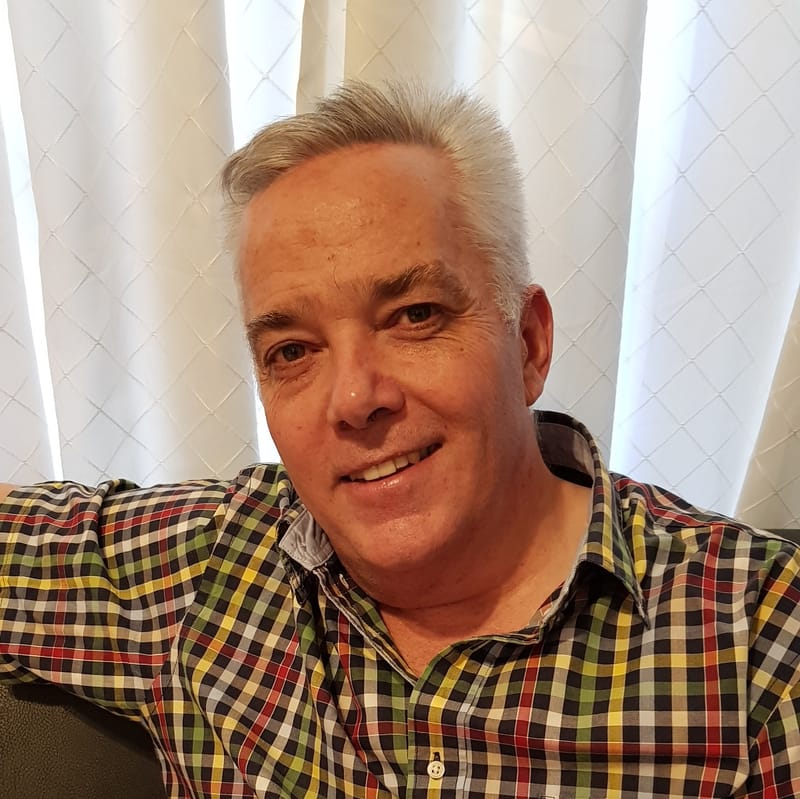
Profile Picture
Most recent photo of myself.
Shortened TEFL Résumé
If you are interested in recruiting me for TEFL coaching and training, please access this file.
TEFL Certification Of Completion
Proof that I have successfully completed by TEFL training course.
Full CV
This is my full CV, inclusive of my work responsibilities over and above teaching, coaching and tutoring.
Contact Me
Talk to me, there is no need for us to be strangers
- Midrand, Gauteng Province, South Africa
- +27 (0) 84 777 0900
- marius.engelbrecht@gmail.com
- Monday to Friday 07:00 - 18:00 (Central African Time)